
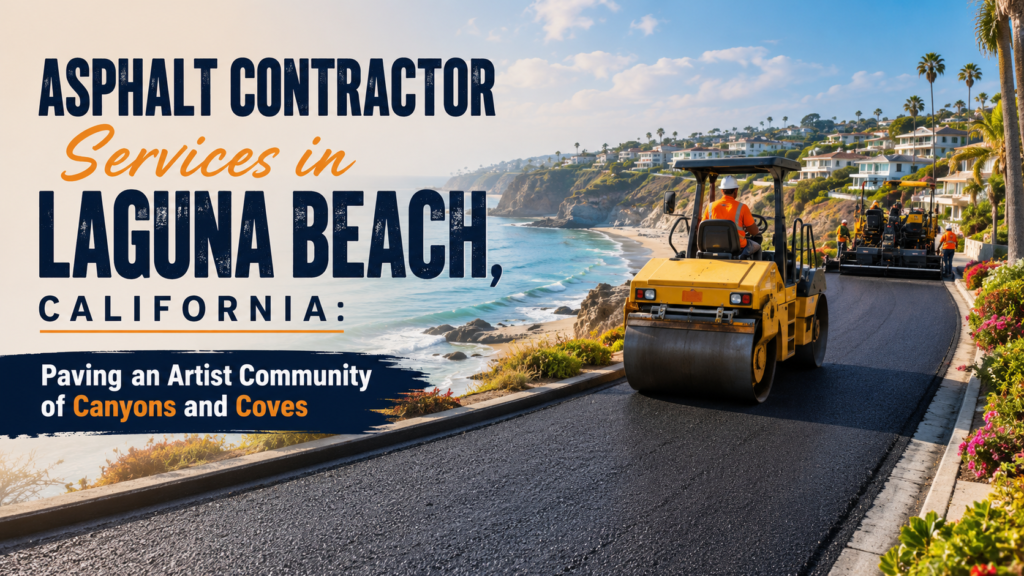
Laguna Beach is one of Southern California most distinctive and beloved coastal cities, a former artist colony turned beach resort town known for its scenic coves, rugged coastal bluffs, canyon neighborhoods, and a deep-rooted environmental and arts culture that has defined the community since plein-air painters first settled there in the early 1900s. With approximately 23,000 residents spread across a landscape shaped by Laguna Canyon, the surrounding Laguna Coast Wilderness Park, and a coastline of rocky coves and beaches, Laguna Beach presents Asphalt Contractor Laguna Beach with a uniquely varied paving environment from the tight, winding streets of North Laguna and the historic Arts District to the steep hillside neighborhoods of Arch Beach Heights, Bluebird Canyon, and Top of the World.
Laguna Beach Terrain: Canyons, Bluffs, and Hillsides
Laguna Beach is defined by dramatic topography. The city sits where canyon meets sea, with neighborhoods built across coastal bluffs, steep hillsides, and the historic Laguna Canyon corridor that for decades was the town only access route before Pacific Coast Highway was completed in 1926. This terrain creates several distinct paving contexts throughout the city:
- Steep hillside neighborhoods: Areas like Arch Beach Heights, Bluebird Canyon, and Top of the World feature some of the steepest residential streets and driveways in Orange County. Asphalt paving on these grades requires careful attention to drainage, surface texture for traction, and base stability to prevent the slow downhill creep that asphalt on steep slopes can experience over time.
- Canyon floor and Laguna Canyon Road corridor: The flatter canyon floor areas present more conventional paving conditions but must account for the concentrated drainage that funnels down from the surrounding hillsides during Southern California rain events.
- Historic legacy construction: As documented in the city own hillside development history, many older Laguna Beach properties some dating to the 1950s and earlier sit on engineered slopes, retaining walls, and foundations that predate modern grading codes. Paving and site work on these older hillside parcels sometimes requires more careful site assessment than newer, code-compliant developments.
Recent Examples of Hillside Paving Work in Laguna Beach
The technical demands of Laguna Beach hillside paving are well illustrated by real projects completed in the community. At The Ranch at Laguna Beach, a resort situated where canyon and sea meet, a sloped access roadway required a combination of techniques in a single project: a section of the road edges was ground down and overlaid with new asphalt, a lower section near the bottom of the slope where existing pavement had failed was removed to a depth of four inches and replaced with new hot mix asphalt, and the entire surface was compacted with vibratory rollers to achieve a smooth, durable finish. This kind of mixed-method approach milling in one section, full-depth replacement in another, all on a single sloped roadway is characteristic of the nuanced, condition-specific paving work that Laguna Beach varied terrain regularly requires.
Coastal Climate Considerations
Laguna Beach mild, year-round coastal climate shapes asphalt maintenance needs in familiar but locally specific ways:
- Sun and salt air combine to oxidize asphalt binder over time, the dominant aging mechanism for Laguna Beach pavement given the area mild temperatures and absence of meaningful freeze-thaw activity.
- Occasional heavy rain events, concentrated by the canyon and hillside terrain, demand well-designed drainage on every paved surface particularly the sloped driveways common throughout the hillside neighborhoods.
- A well-installed asphalt driveway in Laguna Beach, properly maintained with sealcoating roughly every 2 to 3 years, can reasonably be expected to last 15 to 20 years or more a service life that reflects the relatively moderate climate stress compared to colder regions, provided drainage is properly managed from the outset.
Asphalt Milling: A Particularly Practical Option for Laguna Beach
Asphalt milling grinding away a worn surface layer to a specified depth while preserving the structurally sound base beneath is frequently a smart choice for Laguna Beach properties rather than full-depth tear-out and replacement. The technique addresses surface wear caused by sun and occasional moisture exposure without disturbing an underlying base that remains in good condition, while being less disruptive to the surrounding property and landscaping a meaningful consideration in Laguna Beach tight-knit residential neighborhoods, where minimizing construction disruption to neighbors matters. The asphalt removed during milling, known as millings, is collected and hauled away for recycling rather than left as debris, keeping the work site clean and reducing the project environmental footprint.
Coastal Zone and Hillside Development Regulations
Laguna Beach maintains some of the most thorough hillside and coastal development regulations in Southern California, a reflection of the community history with landslides and its strong environmental preservation values. Significant grading, drainage modification, or paving projects particularly on hillside parcels in neighborhoods like Bluebird Canyon and Arch Beach Heights, or on properties within the Coastal Zone (which extends roughly 1,000 feet inland from the ocean throughout much of the city) may require coordination with the City of Laguna Beach Building and Safety Division and, where applicable, a Coastal Development Permit reviewed in connection with the California Coastal Commission. Property owners planning substantial paving or hardscape work on hillside or coastal-zone parcels should confirm applicable permit requirements early, as these approvals can add meaningful time to a project schedule.
Working in Laguna Beach Tight-Knit Communities
Laguna Beach residential neighborhoods, particularly the older sections of North Laguna and the canyon communities, are characterized by narrow, winding streets and closely spaced properties. Asphalt contractors working in this environment must plan equipment access carefully, manage work zones to minimize disruption to neighboring properties and pedestrian areas, and coordinate scheduling with the kind of community awareness that Laguna Beach close-knit residential culture expects. Experienced local contractors familiar with the city specific neighborhoods bring this operational sensitivity to projects throughout the community.
California Contractor Licensing
Asphalt contractors performing paving work in Laguna Beach must hold a current California Contractors State License Board (CSLB) license with the appropriate Class C-12 (Earthwork and Paving) classification. Property owners should verify license status, bonding, and insurance before engaging any contractor, particularly for hillside or coastal-zone projects where the technical and regulatory stakes are higher than standard flat-ground paving work.
Conclusion
Asphalt contractor services in Laguna Beach must navigate one of Southern California most varied and visually distinctive coastal landscapes from steep canyon hillsides to bluff-top neighborhoods to the historic Arts District streets near the city center. Understanding the specific drainage and slope-stability demands of hillside paving, the practical advantages of milling for surface renewal in this climate, and the city thorough hillside and coastal development review requirements equips Laguna Beach property owners to plan paving projects that perform well and respect both the terrain and the community character that make this city one of California most cherished coastal towns.